IEH and Ex-El Group: Trusted Partners in High-Reliability Solutions

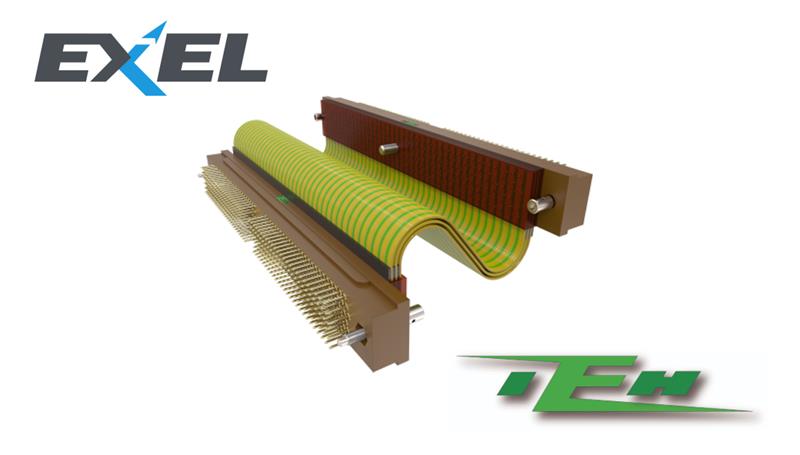
IEH, a key partner of Ex-El Group, has once again demonstrated its expertise in high-reliability interconnect solutions.
IEH, a key partner of Ex-El Group, has once again demonstrated its expertise in high-reliability interconnect solutions.
In defence and aerospace industries, sourcing components is more than just finding parts at the lowest price. It’s about ensuring every component meets rigorous standards, is date and lot code traceable to the original manufacturer and is reliably sourced from authorised and vetted supply chains.
At Ex-Eltronics, we have over 45 years’ experience in providing full traceability for parts supplied into mission and life critical industries and we have robust quality processes tailored to supporting our customers.
Why Traceability Matters
Parts supplied by Ex-Eltronics meet exacting quality standards to ensure safety and reliability. A single failure could have catastrophic consequences. That’s where traceability comes in. Traceability allows manufacturers, suppliers, and customers to track every component back to its origin, verifying its integrity at each step along the way.
In the aerospace and defence industries, full traceability is often a mandatory stipulation. Providing and retaining ongoing clear records of where each component came from and how it was handled is critical. It’s the cornerstone of quality control and essential for maintaining regulatory compliance.
Regulatory Compliance
Aerospace is one of the most heavily regulated industries, and for good reason. Full traceability ensures you can meet the requirements of international standards such as AS9120 and ISO9001, which the Ex-Eltronics group proudly holds. Having accurate, easily accessible trace information can also speed up audits and inspections, keeping your business running smoothly.
Our Approach to Traceability
At Ex-Eltronics, we’ve built a robust system to ensure that every part we source and supply comes with full traceability. Our approach is rooted in several key processes:
The Benefits of Full Traceability in Aerospace Component Sourcing
Having full traceability in aerospace component sourcing offers a multitude of benefits that go beyond regulatory compliance, including:
Looking Ahead: The Future of Traceability
The future of aerospace component sourcing is moving towards even greater levels of transparency and traceability. Emerging technologies such as blockchain and advanced ERP systems are set to revolutionise the way we track and manage components. These innovations will offer even more secure, real-time tracking across global supply chains, ensuring that every part is traceable and accounted for.
At Ex-Eltronics, we are committed to staying ahead of these developments. We believe that continuous improvement in traceability is the key to maintaining our high standards and delivering exceptional service to our customers.
Conclusion
In aerospace, full traceability is more than a regulatory requirement—it’s a vital part of ensuring safety, quality, and trust. At Ex-Eltronics, we’ve built our sourcing process around traceability to give our customers complete confidence in the components they receive. With robust systems in place and continuous improvements on the horizon, we’re here to make sure that your supply chain remains secure, reliable, and fully traceable from end to end. This approach to aerospace sourcing sets Ex-Eltronics apart as a trusted partner in delivering high-quality, fully traceable components.
For more information on how we can support your aerospace component needs, get in touch today via our website or contact us at [email protected] / +44 (0)1420 590390.
A wide variety of critically important components go into keeping aviation platforms and equipment operational and airborne. While major subsystems like propulsion and navigation are among the best-known, no aircraft can remain mission-ready without the interconnect components needed to link its equipment together in a single, effective system.
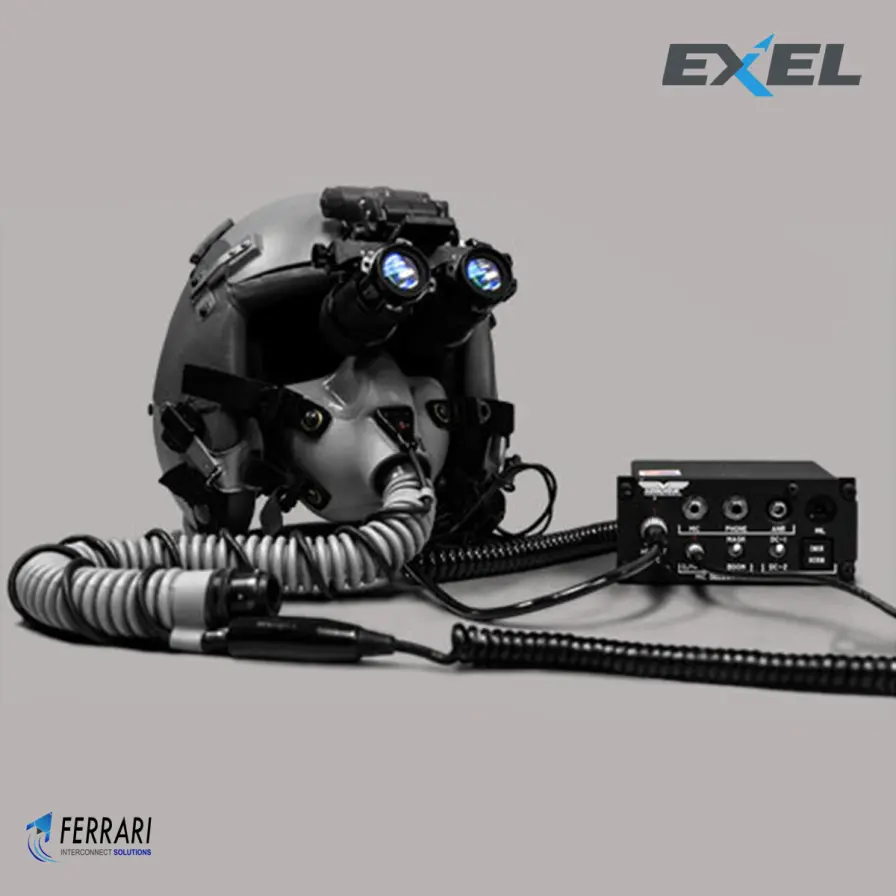
Ferrari Interconnect Solutions has produced products and systems to meet this need for both the aerospace and defence industry since its inception in 2014. Today, as a partner of Ex-Eltronics, this interconnect solutions company offers an extensive range of products and services to support the use of avionics, launchers, communications, flight gear & helmets, test equipment, and many other important assets and supplemental systems.
In this article, we will have a look at what Ferrari Interconnect Systems offers to its customer base today and how this partnership enables Ex-Eltronics to provide total support for similar systems to its ever-growing customer base.
Interconnect solutions refer to products and technologies used to connect different parts of an electrical or electronic system. They’re a key component in enabling communication and data transfer between circuit boards, electronic devices, and systems. Interconnect solutions encompass a wide range of components that include cables, connectors, switches, adapters, sockets, and more.
These solutions come in various forms based on their application; for instance, they can be high-speed data connections in avionics and navigation suites, power connectors in engines, or complex cable assemblies in control and communication systems. They play a crucial role in numerous sectors, including telecommunications, aerospace, critical electronics, and first responders, to name a few.
A custom interconnect solution, as offered by Ferrari, ensures a reliable and robust connection, leading to efficient and high-performance operation of the overall system.
Ferrari Interconnect Solutions (FIS) is a company specialising in providing custom cable and wire products and total interconnect solutions used within avionics and pilot-helmet communications systems. Based in Ontario, California, FIS has been committed to delivering high-quality products and services since its inception in 2014, backed by quality certifications such as ISO 9001 and AS9100.
The experts at FIS pride themselves on their capabilities to produce everything from standardised military equipment to complex custom designs and have experience in this sector dating back to 1978.
Being able to provide rapid turnaround on prototype production, short lead times, and a customer-focused approach gives Ferrari a clear competitive edge. Each product is guaranteed to meet or exceed industry standards, meaning clients can always rely on Ferrari Interconnect Systems for reliable, robust, and efficient solutions.
Ferrari Interconnect Solutions specialises in the design, manufacture, and integration of interconnect solutions for use with aircraft communication systems and avionics equipment. Additionally, they offer bespoke design services for custom mil/aero flight applications as well as support for co-opted designs and build-to-print applications for flight, non-flight, and ground-based equipment.
Some of their products include:
In addition to these products, FIS offers a wide variety of customary and value-added services, including:
Drawing on extensive experience in design and manufacturing for the aerospace and defence sector, FIS is one of the most capable providers of custom interconnect solutions. Based on customers’ connector interface and environmental requirements, as well as specific performance criteria, their engineering team can produce reliable, innovative designs subject to extensive quality control and performance testing prior to implementation and delivery.
In addition, their experts will furnish clients with supplemental producibility and reliability reviews and feedback at no additional cost for customers’ drawings or designs. Plus, FIS can provide custom packaging and supplementary materials including detailed manuals and operation instructions, shortening the implementation time for newly made products and solutions once they reach customers.
Ferrari Interconnect Solutions built its reputation for highly adaptable, robust interconnect solutions in the United States, but its products have almost limitless applicability to avionics and comms systems the world over. International organisations interested in acquiring the services of this interconnect solutions company can turn to Ex-Eltronics, the only official distributor of Ferrari products outside of the US.
If you want to learn more about FIS’ extensive range of products and services or to discuss how they can meet your custom design needs, head over to their partner page on our website to learn more. Or, get in touch today to speak with a helpful representative about how Ex-Eltronics and Ferrari Interconnect Solutions can provide the custom interconnect solutions you need.We can also be reached at [email protected] / +44 (0) 1420 590390
Ex-Eltronics has been a leading supplier of aerospace and defence (A&D) sourcing, procurement, and supply services for over four decades. With Kristine Brackenridge-Battaglia at the helm, Ex-Eltronics can claim to be at the forefront when it comes to female empowerment. Here’s what the current landscape looks like for women in the A&D industry and what Kristine has to share about her experience as a leader in the field.
While strides have been made towards gender equality, there’s still a long way to go. For example, in the US, only 19.4% of engineering positions in A&D are held by women – and in some big-name companies, it’s even less. This is despite numerous studies showing that gender-diverse workplaces tend to be more profitable, more productive, and more appealing to employees. However, certain sectors are moving at a faster pace than others in this direction, and A&D can count itself among that number.
In contrast to engineering and technical subsectors, women in A&D are moving into leadership positions at a faster rate than ever before; Airbus and Rolls Royce are just two of the leading A&D companies with female CTOs. In the United States, women hold 19% of total aerospace and defence CEO positions, nearly four times that of other industries.
With developments such as these, the way of the future is clear: women are set to start occupying more positions at the top and throughout the industry as companies tap into the vast pool of skills and knowledge they offer. To explain her outlook, let’s see what Ex-Eltronics CEO Kristine Brackenridge-Battaglia has to say about her experience in charge of just such a company.
Chief Executive Officer Kristine Brackenridge-Battaglia is the daughter of Ex-Eltronics’ founding CEO, Charles Brackenridge. As such, she’s been with the company for much of her life, developing her professional skill set in the midst of her family’s legacy.
When I joined the company my father founded in 2006, I started at the bottom, cutting my teeth in various roles [in] Purchasing, Export, Quality & Management, as I developed the skills that would one day lead me to where I am now. As president of the Ex-El Group today, I believe those skills have allowed me to take leadership of the company for the 21st century.
For me, leading an innovative company through the challenges of meeting aerospace and defence needs across the globe is as much about the future as it is about our legacy. My daily goal is to emulate the work ethic and dedication to the consistent quality that my father Charles embodied, as well as his firm belief that “our strengths are based on the partnerships we have created and nurtured in our 45-plus years of business.”
I’d say I’m a team-oriented leader, committed to providing guidance and support while ensuring customers’ needs are met and obstacles overcome.
My years of service have helped me to become a problem solver with the experience needed to make major decisions affecting the future of my company. I’ve also developed quality management expertise, making me capable of engaging and strengthening deep-rooted partnerships with suppliers. And I’ve become a detail-focused specialist, well-versed in industry standards and specifications and satisfying customer requirements.
Leveraging my experience at all levels of Ex-El’s operations, I’ve developed the skills necessary to become an expert in export management. I’m capable of formulating export compliance policies and procedures, establishing requirements for and overseeing licence generation, and supporting licence applications throughout the corporate and regulatory agency review and approval processes.
With Kristine providing innovative leadership, the Ex-Eltronics team is ready to face any challenge the future of A&D can pose. Supported by dedicated specialists in every relevant area and an extensive network of partners providing top-quality solutions, Ex-Eltronics can meet all your aerospace and defence electronics needs with minimal lead times and maximum quality assurance.
Find out more about Kristine and the rest of the team on our website, or get in touch today to discuss what Ex-Eltronics can do for you.
We can also be reached at [email protected] / +44 (0) 1420 590390
As we approach the end of 2023, the year has held its challenges for the Aerospace and Defence sector as well as around the world in general. However, 2023 has also seen a string of successes and promising developments for the Ex-Eltronics Group, from fresh talent, branding, and products to the incredible growth of existing relationships.
2023 was a year of growth for Ex-Eltronics, with a range of new Customer relationships developed, new OEM approvals gained, and increasing supply chain successes. Greater recognition and demand for Ex-El’s services and products meant the company needed to take on highly qualified new talent to continue offering our renowned level of service and support.
We are proud to introduce the newest members of the Ex-El Group:
Dorota Kasperek, Internal Sales and Export Coordinator
Phill Tetlow, Buyer
Igor Silva, Buyer
Tony Discipline, Goods in and Inspection
Louise Hatcher, Office Support
Vicki Cooper, Internal Sales
Victor Francois, Accounting
In addition to the newest members of the Ex-El Group, some of the longer-tenured employees of the team reached certain milestones and achievements in their careers, such as Louise Waby who celebrated her 25th anniversary at Ex-Eltronics in April, and Claudia Richens, who started working with Ex-El as an administrator in 2013 and who has since been promoted to the role of Buyer this year.
We also celebrated the careers of a couple of long-tenured Ex-El Group employees who retired from the group in 2023. From our UK Team, Quality and Export Manager Robert Hope announced his retirement from Ex-Eltronics after 24 years of sterling service. The team celebrated Bob’s years of work with a company outing to Goodwood House, West Sussex, while in our US office, we said goodbye to Louise Boyle in our Accounts Payable Department, who had been with the company for over 17 years.
While they may no longer be part of the Ex-El Group, they will always remain part of the Ex-El family. We wish both Bob and Louise all the best in their retirement!

In 2023, the Ex-El Group got a brand-new look online with the company rebranding and updating of our website, which reflects changes to the partnership network and services and products offered. The team redesigned and rebuilt our website to include a sleek, new logo, fresh content, a streamlined look, and an improved user experience. Our valued Customers can now connect with the technical support, products, and expertise they need to succeed.

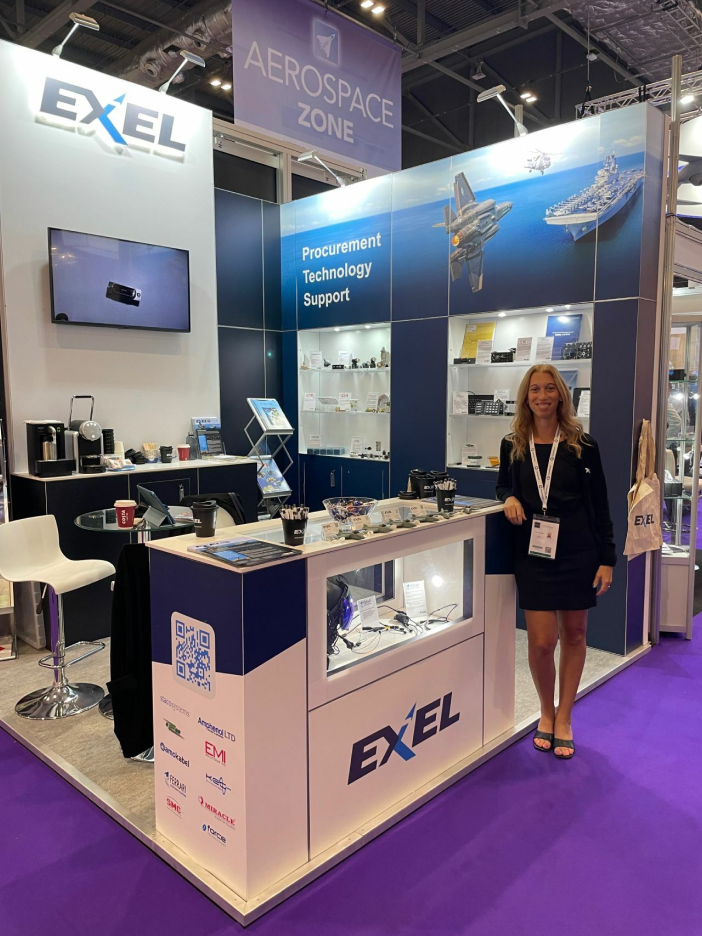
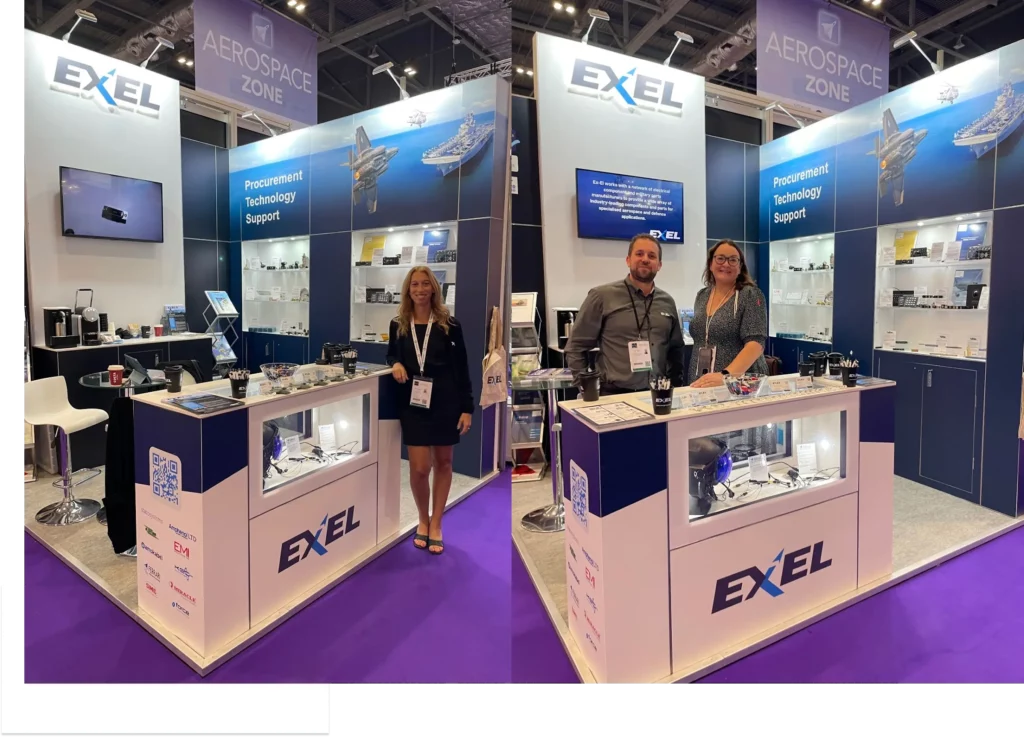
Each September, tens of thousands of representatives from the world’s militaries, national Aerospace and Defence Industries, and governments gather in London to attend Defence and Security Equipment International (DSEI). In 2023, Ex-Eltronics company President Kristine Brackenridge-Battaglia, along with colleagues from our UK office were joined by representatives from EMI Solutions, IEH Corporation, Force Technologies, and KEC to attend the show. We used this opportunity to strengthen existing relationships with Aerospace and Defence agencies and to inform the industry of our latest capabilities and products.
2023 has been a year of promise and growth at Ex-Eltronics as the company’s network has expanded and the team has added new qualifications, accreditations, and capabilities to our lineup. We plan to continue these successes into the new year by investing in key technologies and improvements.
The Ex-El Group would like to take a moment to thank each and every one of our Customers and Partners, who without, we would have never had the success we had in 2023. We wish everyone a wonderful holiday season and a Happy, Healthy, and Prosperous New Year!
Environmental, social, and governance (ESG) refers to the foregrounding of ethical and sustainable practices when it comes to investment and operations. As climate change continues to affect the planet, consumers and regulators expect the companies they do business with to play a part in today’s most pressing ESG concerns.
At Ex-Eltronics, we aim to go beyond ESG goals and rules set out in legislation to provide the most responsible products and services we can. Take a look at each of our ESG policies and the effect it has in the article below.
Registration, Evaluation, Authorisation, and Restriction of Chemicals, or REACH, is a European Union regulation adopted to improve the protection of human health and the environment from the risks that can be posed by chemicals. It also promotes alternative methods for analysing the hazards of substances in order to reduce the number of tests on animals.
Given the nature of our products, and based on the information provided by our suppliers and partners, Ex-Eltronics isn’t required to be registered under REACH. In the unlikely event that any hazardous materials are found in our products, the amounts would fall far below the regulation threshold of 1 tonne per year.
Conflict minerals are naturally occurring resources like tin, tungsten, tantalum, and gold, that are extracted in a conflict zone and sold to perpetuate ongoing warfare. These minerals are used in a range of everyday products including electronics and jewellery.
At Ex-Eltronics, we support the humanitarian aims of the Consumer Protection Act of 2010 and are committed to using only responsibly-sourced minerals from reputable manufacturers and distributors. Should it ever come to light that one of our suppliers is sourcing minerals from conflict zones, we’ll end our relationship with them immediately and seek out a more ethical party.
In the context of ESG criteria, bribery refers to the unethical act of offering, giving, receiving, or soliciting something of value to influence the actions of an individual or organisation. Bribery is a principal component of the “governance” aspect in ESG and is strictly prohibited due to its negative impact on the fair and transparent operation of businesses and markets.
Ex-Eltronics’ policy is to conduct our business honestly and ethically, taking a zero-tolerance approach to bribery and corruption. For that reason, we’re committed to upholding all anti-bribery and anti-corruption laws in the jurisdictions where we operate and expect the same from our suppliers and partners. Our offices in the United States and the United Kingdom are also bound by relevant national laws.
Modern slavery refers to exploitative practices including forced labour, debt bondage, human trafficking, and child labour. It occupies a significant part of the “social” element in ESG, as it violates fundamental human rights. ESG-conscious businesses have a responsibility to ensure that their operations, as well as their supply chains, are free from modern slavery activities.
We take a zero-tolerance approach to modern slavery along with a commitment to transparency throughout our supply chain to ensure we don’t work with companies that profit from it. Ex-Eltronics also expects partners to adopt similar policies and employees, contractors, agents, and others associated with our company to act accordingly.
Concern for the environment was the driving force behind the development and adoption of ESG frameworks. Ex-Eltronics’ policy is to comply with environmental legislation and regulations and to periodically review our environmental performance. We also strive to keep environmental concerns and impacts at the centre of our decision-making and governance processes.
In our workplaces, we aim to minimise energy and water use as well as waste. Instead, we endeavour to reduce, reuse, and recycle whenever possible, and to purchase products and services with minimal environmental impacts. Lastly, Ex-Eltronics aims to keep employees, clients, and the public informed on our environmental policy and practices and to develop and maintain emergency programmes for health, safety, or environmental hazards.
In ESG contexts, policies against the use of counterfeit or unapproved parts and products are essential from multiple perspectives:
As part of our zero-tolerance approach to the use of counterfeit products, Ex-Eltronics only sources new parts directly from manufacturers or authorised distributors, unless specifically requested otherwise by the customer. This supports our aim to achieve full traceability throughout our supply chain and to provide our customers with the highest guarantees of quality and reliability.
Head to our Quality Standards page if you’re interested in getting further details about our ESG policies. If you have any specific questions about our practices, get in touch today via our website or contact us at [email protected] / +44 (0) 1420 590390.
Whether you work in defence, aerospace, or industrial environments, electromagnetic interference is a bane to your operations. But what’s the best way to deal with it?
In simple terms, electromagnetic interference (EMI) refers to the effects of electromagnetic fields, such as radio frequencies, on sensitive electronic devices and systems. It’s surprisingly widespread and can be severely detrimental to your systems. Fortunately, there are two possible solutions to this issue: filtering and shielding.
EMI filtering and shielding are two different techniques used to address EMI in electronic devices or systems. With electronic systems, there are concerns regarding radiated and conducted susceptibility AS WELL AS radiated and conducted emissions, which are EMI noise coming from your own system.
But what’s the difference? Read on for more details on the pros and cons of EMI filtering and shielding and what you can do to protect your equipment from radiating or being susceptible to these effects of EMI.
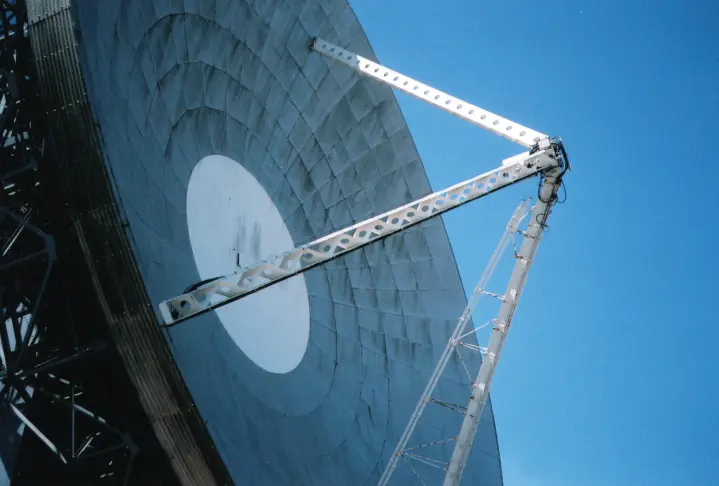
By the 1930s, radios were rapidly becoming household essentials across the world, and users began to notice the strange effects the frequencies had on other electronics and electrical devices. The phenomenon, called “electromagnetic interference,” made it clear that a method for protecting devices from errant radio signals was needed. An approach to these issues came in 1933, when the International Special Committee on Radio Interference (CISPR), a sub-committee of the Paris-based International Electrotechnical Commission (IEC), issued the earliest recommendations for minimising EMI. Emissions limitations came about as systems were connected to ensure that noise created in one system would not interfere with the performance of another.
The need for more comprehensive EMI filtering and shielding methods and equipment in defence applications was recognised as early as 1967. That year, the aircraft carrier USS Forrestal, then deployed in the Gulf of Tonkin in support of U.S. forces in Vietnam, suffered a catastrophic fire when an electronic anomaly triggered a Zuni rocket. This led to 134 deaths and nearly 200 injuries. It was later determined that an incorrectly fitted shielded cable connector and multiple electromagnetic fields on the flight deck caused the rocket to fire, igniting a fuel tank on a nearby aircraft.
Later, when mobile phones and other portable electronics became more prevalent in the 1990s, multiple airlines realised that signals from these and other devices could interfere with the avionics suites, hindering an aircraft’s ability to fly or navigate safely. Military leaders found that electromagnetic interference, whether natural or manmade, could disrupt global positioning system technology (GNSS) badly enough that unmanned aerial vehicles could not be reliably flown. GNSS disruption and EMI due to military activity represents a notable civil aviation safety-of-flight concern that continues today.
After radio, many other forms of electromagnetic interference were recognised, including microwaves, infrared, as well as gamma and X-rays, each of which may be countered with an array of methods and devices. CISPR’s recommendations form the basis of modern international EMI prevention standards, as well as define how electronic devices can co-exist without interference affecting performance. This is referred to as electromagnetic compatibility.
Electromagnetic compatibility (EMC) defines the ability of electrical and electronic equipment to operate acceptably when exposed to external electromagnetic sources and limiting internally generated unwanted electromagnetic energy. EMC covers three areas. Limiting EMI emissions generated by the equipment, its susceptibility to external sources of EMI, and its level of immunity when functioning in its defined environment.
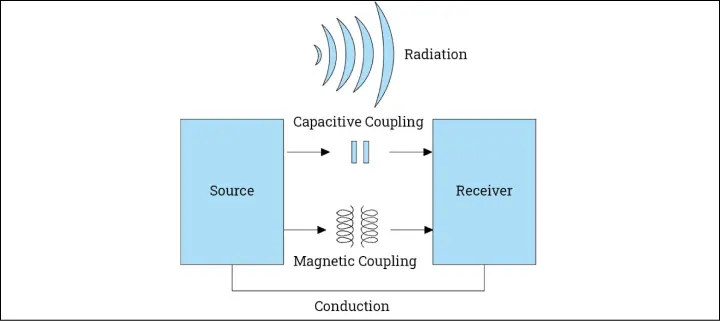
Electromagnetic interference can be classified into four general types based on either the source or bandwidth of the original signal. Narrowband EMI is that produced by mobile phones or radio or television transmissions whereas broadband EMI has a wider radio spectrum with unintentional radiation emitted from sources such as electric power transmission lines. Depending on the source, EMI can be classed as intentional, unintentional, intersystem, or intra-system:
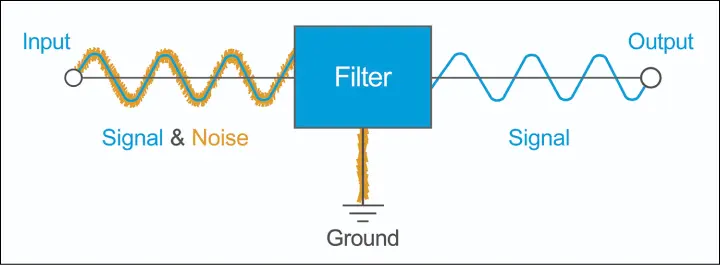
EMI filtering is an important consideration in the design and manufacture of electronic devices to ensure their reliable operation and compliance with regulatory requirements for electromagnetic compatibility (EMC).
EMI filtering refers to the process of reducing or eliminating the interference caused by electromagnetic signals in electronic devices or systems. It is a technique used to filter out unwanted electromagnetic signals (noise) that can disrupt the operation of electronic devices or cause electromagnetic interference.
EMI filters are usually placed at the input or output of the device and can be panel-mounted or PCB-mounted. They consist of a combination of passive components such as capacitors, inductors, and resistors, which are designed to attenuate or suppress electromagnetic interference in a given frequency range. They are often used in electronic devices such as power supplies, audio equipment, computer systems, and other electronics that require a high level of reliability and EMC.
EMI filters are typically low-pass filters, which allow lower frequency signals to pass whilst blocking high-frequency signals or ‘noise’. Capacitors block these certain frequencies and allow others through. The capacitors discharge to the ground plane, allowing them to reduce the signal in the higher frequencies. Inductors work differently; they absorb energy from the higher frequencies and turn it into heat, resulting in the dampening of the high-frequency noise. Custom filters can be made by ‘tuning’ the combination of the capacitors and inductors to the specific frequencies required.
EMI filters can be classified into two types: differential mode filters and common mode filters. Differential mode filters attenuate the interference that occurs between two signal lines, while common mode filters attenuate the interference that occurs between a signal line and the ground.
EMI shielding is the process of reducing the electromagnetic radiation emitted by electronic devices or systems and also preventing external electromagnetic signals from interfering with the operation of these devices. EMI shielding is necessary because electromagnetic radiation can interfere with the operation of other electronic devices, causing malfunctions or errors. EMI shielding involves the use of conductive materials such as copper or aluminium to block or attenuate electromagnetic signals from entering or leaving the device.
EMI shielding can be achieved by placing a conductive shield around the device (called a Faraday Cage) or by coating the device with a conductive material. The conductive shield or coating creates a barrier that prevents electromagnetic signals from entering or leaving the device, thereby reducing the risk of electromagnetic interference. EMI shielding can be applied to electronic components, circuit boards, cables, and even entire electronic devices or systems.
Your choice between filtering and shielding depends on various factors, such as the sensitivity of your device as well as the amount of EMI it will generate. Conductivity, size, and cost will also play a part in choosing the best EMI solution.
Shielding takes a holistic approach to EMI management while filters target specific areas of EMI. As much as shielding reflects incoming energy, some absorption still takes place. Converting into heat energy, this then requires some type of thermal management. Also, the quality of the material used in shielding not only influences the output but the weight of the system as well i.e., thicker shields are more effective but are heavier. And while shielding reflects and cages EMI, filters are capable of eliminating EMI by addressing the most vulnerable points in a system that produce the most interference. As a result, filters may be custom fitted to your specific needs.
At Ex-El, we have long understood the importance of protecting sensitive industrial and mission-critical military electronics against all forms of electromagnetic interference. That’s why we specialise in the creation of off-the-shelf and custom EMI filtering solutions utilising our partner EMI Solutions.
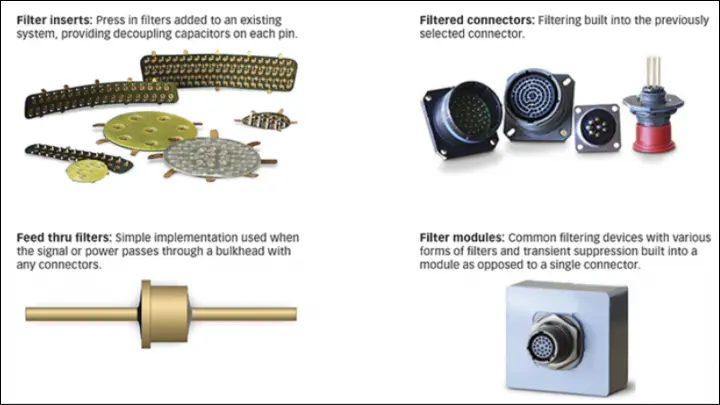
The EMI filter modules, filtered connectors, and FlexFilter Inserts that we supply to our customers are subjected to the most rigorous testing standards and comply with the highest military and industrial specifications to keep your systems reliable in the most demanding of environments and applications.
We also offer a range of EMC backshells, glands, and panel fittings, which offer 360˚ EMC screening through distribution partnerships. The EMC backshells we supply are UK designed and manufactured, with integral and additional strain relief options as well as environmental sealing options to IP68.
For more information on the products Ex-Eltronics has to offer to see to your EMI needs, visit our partner pages at KEC Limited and Amphenol LTD.
To discuss your needs or to find out more about what we can do for you, reach out to us today.